Category: US National Parks

A Rainy Day In Little Sand Bay

Friday, September 19, 2025

L:58 H:63

It was a rainy, gray morning, which was nice to catch up on a few things – emails, a little news, the blog, etc. Since the Apostle Islands Cruise was cancelled yesterday due to high winds, we had scheduled for today. However, it wasn’t looking so good for today either, so we rescheduled for Sunday. 

We kept looking at our schedule. we might not even see this national park at this rate. We are supposed to leave on Wednesday for St. Croix National Scenic River. We considered cancelling that to give us more time here.

After lunch, we decided on two things we could do in the rain – the Maritime Museum and driving “The Fruit Loop.” Parking in Bayfield is a trick, but we are getting the hang of it. In front of the museum a man was building a small boat. A volunteer, he was very polite in telling us what he was doing, and he loves working with wood. It was like a boat museum in Newfoundland where volunteers built a boat every year, then auctioning it to raise money for the museum. The Bayfield volunteer said they haven’t caught onto that yet. 

It was very cool inside, with displays of big and small ships and fishing boats. There was a display of the shipwrecks around Apostle Islands. I was fascinated by the display of sailboat rigging. Around the corner Martha worked on a hands-on display of knot tying. We might have stayed there for an hour, but others wanted to try it. 

There were engine displays, both big and small. The one that intrigued me was an old Indian recording of how he built birchbark canoes. A real birchbark canoe was standing against the wall. I would like to listen to that again. He looked for a special birch tree and told how he stripped the bark, sealing the seams with pine pitch. The frame was made from a special northern white cedar. He said he only cut three of them down in his life.

On our way out, Martha put $20 in the contribution box. The man working the front thanked us with a smile and said, “Ring the bell.” After looking around, I pulled the string beside the door, ringing the bell. Outside was a big bell from a boat, so I gave that a ring too. 

We walked over to the fish store. Most things had been sold because the weather had limited fishing. They did have some whitefish liver, which we had seen on the menu at Manypenny Bistro. The young lady behind the counter said she had never had it, but reports are that it is similar to chicken livers. “It’s a thing here.”

This area is big for fruit farms, and there is a drive that takes you past some of the farms that have shops, stores or roadside stands. Apples are big, but also blueberries, raspberries, grapes and more. It was raining pretty hard when we stopped at the first one, Apple Hill Orchards.

I thought he had an Aussie accent, but he was from England. A soccer player, he had traveled to many places, but he always liked this area the best, so he and his wife started this orchard. We bought a bag of Courtland apples on his recommendation, a candy apple and an apple crisp. He was a nice chap, and we enjoyed talking to him. We were going to the farmer’s market tomorrow, so there was no sense in stopping by more farms.

Missing one of our turns, we ended up driving by a lot of the farms, wondering what was being grown. We saw 24 turkeys on our 30-minute drive, plus a beautiful red fox dashing full speed across the road. Later I looked up what turkeys eat, since they seem to proliferate here. Acorns are a staple of a lot of wildlife, but turkeys are omnivores. They eat insects for protein, acorns, and they love fruit. They will eat apples on the ground and berries from bushes, but also clover, grass and other soft greens. No wonder they do well here.

We stopped at a tiny log house with a sign. We have passed it a number of times, but had other things to do. Interesting story.

Back at camp, we drove around a bit and found the closed visitor’s center had WIFI, but it is only strong at the building. I took my computer over and loaded pictures for the blog, We can get one bar of cell service in the Airstream, but our cell booster gives us one more. That’s enough to get messages and emails, but not enough to upload pictures, and surely not videos. Moving my phone around the trailer, I get one bar sitting at the table, two bars in the cabinet above the refrigerator and three bars up against the booster. I’ll try to find a way to hang the phone there.

Martha made a fine dinner of pork chops and mushrooms from the farmer’s market, cooked in butter with peas – very good.

Hike Falls Trail Bandelier NM/Valles De Caldera National Preserve

Thursday, August 25, 2022

50 degrees at 6:00, high 75?

We hiked 1.5 miles to Frijoles Creek Falls. It’s a pretty cool area where the creek flows down a steep canyon and into the Rio Grande River. Since we are in monsoon season, the water was flowing nicely over the fall. 

We talked with a couple from Durango, Colorado, who had some good suggestions for our next stop, Taos. Combining theirs with our Airstream friend in Santa Fe:

1. Ride the narrow gauge train

2.  Drive the 80-mile loop from Taos

3. See the missions on the upper road to Taos

4. See the two houses owned by a lady in Taos

5. Taos Pueblo

As I look north of Taos for the next place to go, I see we run into Great Sand Dunes National Park. We are coming up on Labor Day, so we need to be booked.

We went back to the Visitor’s Center and watched a movie about the park, then toured an area they had just reopened since the fires last year. It is a very nice visitor’s center with very friendly and informative staff.

We had lunch at the pretty, little cafe. Eating in a courtyard planted with Hollyhock with hummingbirds zooming around.

We drove west, up a winding mountain to see Valle Caldera that we had heard about from several people. Stopping at a beautiful overlook, Martha said, “I think that’s the prettiest place I have ever seen.” We drove into Valle Caldera National Reserve and stopped at a small house that was the Visitor’s Center. Two rangers were busy repeating instructions to visitors. We opted for the drive through the beautiful valley to get the big picture. At lunch at the Indian Art Festival, Bob had told me about fishing the two streams here. They are beautiful, clear spring creeks running across the valley.

It started to rain as we began our drive. It is a beautiful grassland reminding me of Yellowstone. We kept looking for deer or elk, but never saw any. We did see a very pretty coyote. Although there are some very nice cabins, there is no place to stay in the park, but there is a campground not far up the road.

Coyote trots by

Valle Caldera is a super-volcano, like Yellowstone, and it is still active. There are a couple of hills and mountains in the valley, which I learned reading the brochure, are due to the magma refilling and pushing up those hills. When this one went off a million years ago, it was 600 times more powerful than Mr. St. Helens! 

It rained heavily as we splashed through puddles on this dirt and gravel road. I kept looking for a rainbow, but never saw one. As we drove out, the rain stopped within a few miles, making us wonder what forces this caldera holds. 

Toozigoot National Monument, Jerome, Cottonwood, Arizona and The Church of the Holy Cross

August 17, 2022

There are three national monuments around Sedona; Toozigoot, Montezuma Castle and Walnut Castle. We opted for Toozigoot, a pretty impressive site that sits on a hill above the Verde River. It is one of many in the Verde Valley, but it seems to be a place of leadership, a place where people gathered from all over.

It is also interesting, because there still remains a good water supply and fertile valley, yet they still left about 1300, similar to all the sites we have visited. The other two monuments were sin agua or without water, yet they managed to thrive. With 80 other sites in the valley, there was once a large population that lived here. At some point the Tonto Apache moved into the area. 

We drove up the side of a mountain to Jerome, a once thriving mining town, where gold, silver and copper made some rich. It also has a history of fires, mine collapses and other disasters. The museum has a good movie, telling the rich stories of the town.

Now, it is a tourist town with narrow, winding streets, restaurants, stores and bars. You wouldn’t want to drink too much and drive down this mountain. 

We drove back to Cottonwood and had lunch at The Old Town Cafe, which was very good, and then poked around the cute, little town. 

Back in Sedona, we went to see the Church of The Holy Cross, sitting high on a hill with a great statue of the Crucifixion.

Move to Sedona, Arizona

August 14, 2022 at 3:20 AM

59 degrees at 6:00, high 91

Three hours south on 160, then “Everything’s Fine on 89” is Sedona, Arizona. Martha had requested Sedona, after Mark’s recommendation. Along Rt 89, we saw a sign for Wapatki National Monument. Since this trip is all about the national parks and monuments of the “Four Corners”, I wheeled into the park, not knowing anything about it. From the NPS website:

Footprints of the Past

Nestled between the Painted Desert and ponderosa highlands of northern Arizona Wupatki seems like an unlikely landscape for a thriving community. In the early 1100s during a time period of cooler temperatures and wetter seasons the ancestors of contemporary Pueblo communities created a bustling center of trade and culture. For Hopi people these sites represent the footprints of their ancestors.

Next door is the Sunset Crater Volcano National Monument. It erupted between 1040 and 1100. Wapatki is different in a couple of ways. It is not in a canyon, and it had a ball court, the northern most ball court in America. The park is 39,422 acres, and Sunset Crater is another 3,000 acres. The ball game was likely similar to the Mayan or Aztec games with a stone ball, likely covered with pitch.

Driving on to Sedona, traffic was slowed by road construction for miles around Flagstaff on Interstate 17. It was stop and go traffic. Our route took us south of Sedona before we could head back north. The mountains surrounding Sedona are spectacular. 

We arrived at Rancho Sedona RV Park where a young man guided us into our site. 

Navajo National Monument, Arizona

Saturday, August 13, 2022

59 degrees at 6:00

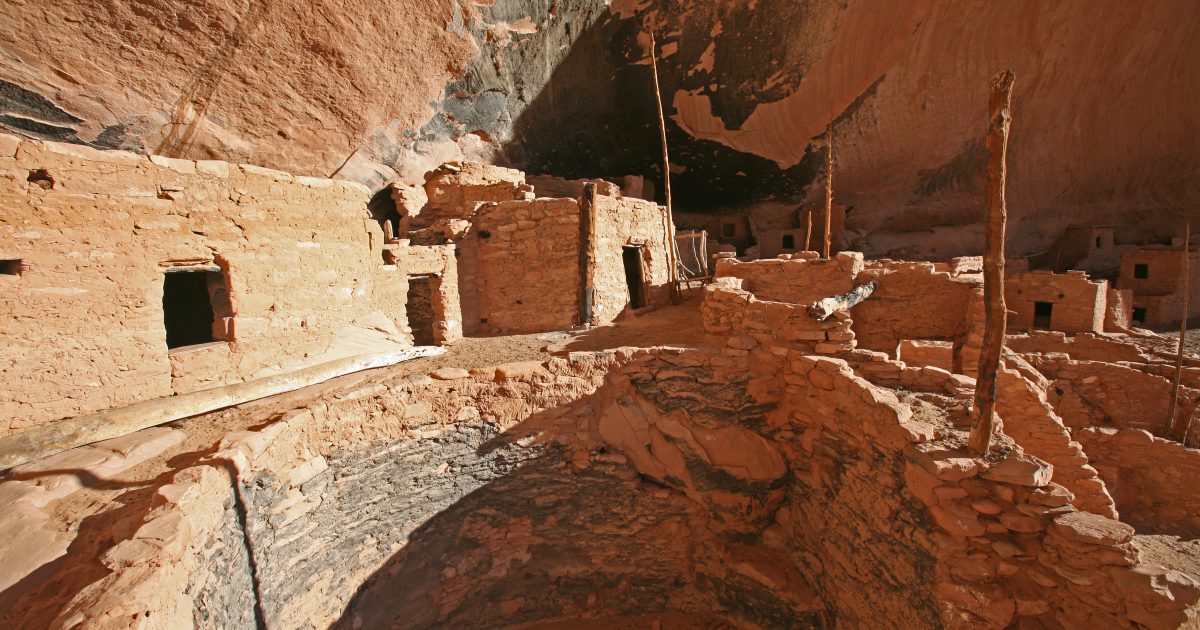
“The Hopi, San Juan Southern Paiute, Zuni, and Navajo are tribes that have inhabited the canyons for centuries. Springs fed into farming land on the canyon floor and homes were built in the natural sandstone alcoves. The cliff dwellings of Betatakin, Keet Seel, and Inscription House were last physically occupied around 1300 AD but the villages have a spiritual presence that can still be felt today.” From: https://www.nps.gov/nava/index.htm

You can take a guided tour of Betatakin for half a day. The only other way to see it is from an overlook across the canyon. The only way to see Keet Seel is a 10-hour, 18 mile hike. You must have a permit, and you will meet a ranger at the site for a guided tour. It is supposed to be one of the best preserved sites. These are incredible sites, and the Navajo consider them sacred sites. No doubt, they will be better preserved in this way, however they do allow their cows to roam these lands.

We opted to go to the overlook, carrying my heavy 200-500mm lens and a tripod. It was worth it though, as I got some pretty good pictures. We walked back up past the nice Visitor’s Center and down the trail to Betatakin until we reached a gate. It gave us a feel for the canyon. 

There is a very nice write-up on Keet Seel at: https://www.gjhikes.com/2016/07/keet-seel.html.  After reading about the adventures explorers have had in finding these sites, this is a relatively easy trip to an incredible site where you can be guided through the site, climbing the ladders into the houses where the ancients lived.

From: https://www.visitarizona.com/imager/s3_us-west-1_amazonaws_com/aot-2020/images/landmarks/fxccaorivfyh9nvn87xk_bc0d2157d501d4729a3d5631708a6b2e.jpg

Inscription house has suffered from erosion, people digging in the site and school children inscribing their names on the walls, so it has been closed. Still the problems persist. “The latter ruin derives its name from an inscription scratched into the clay plaster of a wall. It reads, “Shapeiro Ano Dom 1661.” An intrepid early Spanish explorer or missionary, probably on his way to or from the Colorado River, must have entered the canyon in which this ruin is located and paused at the long-abandoned pueblo to scratch a record of his visit. So far as recorded it was not visited again until June, 1909.” From: https://navajopeople.org/blog/inscription-house-ruin-nitsie-canyon-arizona/.

From: http://navajopeople.org/blog/wp-content/uploads/2012/07/inscription_house_01-720×317.jpg

Drive to Navajo National Monument

Friday, August 12, 2022

67 degrees at 6:00, going to 91 deg.

Sunrise from our campsite in Natural Bridges National Monument

At 8:00 we set out for Navajo National Monument, turning south on 191. I desperately needed to get the Virginia Airstream newsletter out. With no cell phone service recently, it has been difficult. We could have turned left to the nice Visitor’s Center in Blanding, but hoped to find something in Bluff. We turned at sign for the Visitor’s Center and parked in the shade. 

We were greeted as soon as we entered, showing us pictures and an exhibit. I had read a sign in front of Natural Bridges National Monument about the Hole in the Rock, wondering if it was the Hole in The Wall gang, but it was not. It is the amazing story of a group of 236 Mormons assigned on a mission to the Four Corners area. Their 200-mile trip took six months in the winter. They had to cross the Colorado River, widen a slot canyon through the west wall of Glen Canyon and build a road up the solid rock San Juan Hill. Exhausted and out of food, they stopped in what would be called Bluff, Utah on the San Juan River, irrigated, planted and made a trading post. As our guide said, “It would become the Walmart of the time”. 

Hole in the Rock
Then going up San Juan Hill

We watched three cool movies in three rooms describing the events, then toured the center. Outside were cabins, wagons and tools showing what it was like in those days in 1879. It was cool, but I HAD to get a newsletter out, so we sat down at a picnic table and went to work. It took me 45 minutes to update new members. I’m sure there is a better way to merge an Excel spreadsheet with gmail. I thought I got everyone, but would latter learn I had missed at least one.

It was noon by the time I was finished, or as finished as I was going to get. We filled with diesel at $6/gal and got some ice and orange juice. We turned west on 160 toward Kayenta through increasingly drier land. Temperatures fluctuated around 90. We turned north toward the Monument where a sign warned not to bring trailers over 26’ due to limited turn-around areas. We were 25’, so we drove on. 

We went into the nice, and busy Visitor’s Center. I showed my Senior Pass, but the lady said. “This is a no-fee park.” She explained the two camping areas that are first-come first-serve. With this crowd, we hurried to the small campground, but it was almost empty. We drove around three times, trying to pick a good site, settling on #4. We wiggled around 15 times before we were satisfied with our position, but still, I could barely put the awning out.

View from the back of our campsite

We went back to the Visitor’s Center, which was now quiet. It is an historic site where people lived 1,000 years ago. Well, they probably lived here much longer than that, but this was the building era of the Anasazi or The Ancient Ones. the Center had beautiful basket, pottery and tool displays. 

We walked out back where trails led to views of the ancient sites. It was getting late and a storm was brewing, so we went back to camp. Soon a big thunderstorm came with a lot of greatly-needed rain.

Natural Bridges National Monument, Utah

Wednesday, August 10, 2022

57 degrees at 6:00

A short rain early, but then cleared. The stars were amazing after the moon went down, and I saw several shooting stars. I am frustrated not having cell phone coverage, although a message or email will occasionally sneak through. I am way behind on the blog and I desperately need to get the Virginia Airstream newsletter out. 

Since we had a little rain, we decided to have a morning fire. I love a morning fire to take the chill off until the sun comes up. By 9:00 we had packed up, hooked up, filled our water jugs and set out on the gravel road from Bradfield Campground. We were nervous when we first pulled in on Sunday with a weekend crowd, but Sunday night they all left, except one camper, Chuck and his wife. We had three peaceful, beautiful nights there for $4/night.

We turned onto 491 north toward Monticello. It was only a two-hour drive, but we had some things to do. Our $4 campground didn’t have a dump station, so Martha searched on Campendium and found a Maverick Adventures First Stop gas station had a dump station! It was a big station with a big store and a tractor-trailer parking area. We were surprised there was no fee. They also had fresh water for an RV, but our hose wouldn’t reach. We could have, or should have, bought a second hose, but storage is always an issue, so we went to the Monticello Visitor’s Center. Jim Eberling greeted me and told me where two spigots were. There was a five dollar fee, which I paid. 

On my way out the door I noticed a cool museum across the hall, and called Martha to come see. They had some neat things, including moccasins from before the Anasazi! Jim got to talking to Martha about our travels, then took us to his desk to point out some things we shouldn’t miss. Sheez! There is so much stuff to see, especially in the amazing San Juan County, Utah, that it would take months or years to see. We did note “House on Fire” and Bear’s Ears National Monument. I need more time!!

Despite considerable wiggling, we could not get close enough to fill the water tank, so on we went to the next town, Blanding, and stopped in their Visitor’s Center. The nice lady said we could get water at the 7-Eleven five blocks away. Well, they had good WIFI and a nice sitting area outside under some trees, so we sat down to get email, get what I needed for the newsletter, and to fix my protonmail server. By then we were hungry for lunch. Across the street was Patio Diner, rated 4.6, so we went in. Martha got a Burger while I had a Chicken/avacado sandwich. 

Then down the road for water at the 7-Eleven. I enquired inside, and she said it was $5. I happily paid, and she handed me a telephone with a cord and a funny-shaped key attached. Showing me a map, she said pull in front of the station, over to a house to find the spigot. I crept across the lot with eyes searching for water in front of this house, and there it was – a water spigot with a padlock on it and a sign above. Using the key attached to a telephone, we unlocked the padlock and happily filled the water tank. We noticed there was an RV park just ahead of the spigot.

Now it was 1:00 and we still had an hour to go to Natural Bridges, and it was hot. Out of town, we took a right and were greeted by a sign warning us there are no services for the next 120 miles. We should have a full tank of gas, food and water. Sounds like the Loneliest Road through Nevada, only that is a lot further. 

Down we went into the valley toward the Colorado River, and the terrain became more desert-like. Winding our way around, we finally turned into Natural Bridges National Monument. We were greeted at the Visitor’s Center by a young woman who lacked all charm and warmth. After showing my senior pass and driver’s license, she tossed me a one-page description of the park. We looked around the small center and headed out to the campground. 

We could drive around, select our spot, and pay at the self-pay station. We were the only ones there, and selected site 4 for the views. Combined length should not exceed 26’. Well that eliminated us, but we might have to pay for another site for the truck. We’ll see. It’s considerably more expensive than our last site at $7.50/night with a Senior Pass. God Bless those passes!

After a little rest, we drove the “Loop”, which is 9 miles long, beside a lovely canyon. We got out in several places to take a look, and were impressed. Now we really are left with one day to try to see a lot. At the last overlook, we talked with a young lady, who was walking a pretty big hike. Her boy friend has just taken a job here, so she took some time off to explore the area. Like Karen, she is a big-time hiker, and soon she was off to get in a few more miles. She told us one way to do this is to hike down one side, walk along the bottom, and come up the other. Martha said, “Then you have to walk back across the mesa to get to your truck.” I’m sure someone would give us a ride, or you could leave a bike. 

Canyon of The Ancients National Monument

August 9, 2022

53 degrees at 6:30

With 270,000 acres and hundreds of sites, there is a lot to explore and discover in Canyons of the Ancients. We opted to hike Sand Canyon Trail to Saddlehorn Pueblo and Double Cliff House for a 4-mile out-and-back hike. We were a little late getting started at 9:00, but it took us about 40 minutes to get there. It was 78 degrees when we started and 83 when we finished. That is not so bad, but at 5,400’ and clear skies, the sun is hot, and it is VERY dry, so we made every effort to drink a lot of water.

We could see others had made the hike already. Dirt bike tracks helped mark the trail. It looked like someone ran the trail, and horses had come up last weekend. The entire trail is 6 miles one way with a 700’ gain in elevation. I can’t imagine the biker went the whole way. A horseback ride would be a nice way to explore this vast region, but you would need a lot of water.

It was a very pretty hike. Just when you think you have seen all possible rock formations, a different group presents itself. The lower layer was bright red from oxidized iron. At one point I thought we were back at Goblin Valley. Surrounded by such history makes the hike pretty amazing. Natural features present many great home sites for cliff dwellers. It is so dry now, you have to imagine it when water was plentiful, especially at Double Cliff House. There would have been two waterfalls and perhaps a lake. Farming would have been good, with lots of game. When it all dried up abound 1200, the people migrated south to better water sources. to the east they followed the Rio Grande south. To the west they followed the Colorado.

We passed a lot of people out for a hike. One young man looked determined to do the whole thing – a 12-mile trip. Walking back down, we got a different view and perspective of Ute Mountain and the beautiful irrigated farms below. There are a number of other trails in the area. It would be fun to come back and do them.

We drove to the top of the trail to see Sand Canyon Pueblo, which has not been excavated. It is a huge site where hundreds once lived 1,000 years ago. Somehow modern technology is able to scan the area and see what is below the earth and rubble. Pictures on signs showed what it looked like, which is pretty amazing.

We had lunch in the shade at a picnic table. Then we drove to the cute, little town of Dolores and went to Dolores Market that Martha had heard about. It’s a small market, but it has everything. Browsing the store, I passed by a substantial kitchen where three women were working. The smell of freshly-baked cookies filled the air. I watched a lady carry out a tray of cookies. They are known for their pies, and we bought a tri-berry pie along with sausage they made and a few other things. 

I needed to get some emails out and work on the Virginia Airstream Club newsletter, so we went to the Dolores Library. It is a beautiful library with outdoor seating and a park-like setting beside the  beautiful Dolores River. Several people were tubing down the river on a hot afternoon. 

I was able to get a lot done in a few hours, until a storm came through, knocking the internet out. Then my email app wouldn’t load and didn’t like my password. In a panic, I remembered this happening several times before, and I wanted to get it resolved before leaving this nice library, but I could not. I got the emails sent by going to the email website thankfully. 

Driving, we saw the Dolores River flowing into the McPhee Reservoir then out through the dam downstream to our campground. We drove to the recreation area next to the campground and saw why so many come here. It is a great swimming hole with a rock ledge on the other side. A family was enjoying the day, and a young boy showed how you can jump off a 10’ cliff into the water. A big sign described the river and canyon below. It looks a bit muddy and low to be able to run the canyon right now. Apparently there are trout in the river, but it is awfully hot with little cover for trout. They would be looking for cold springs to hold out in. We agreed that the river offers a lot of opportunities in this area, but tomorrow we leave for natural Bridges National Monument. 

Hovenweep National Monument

Hovenweep National Monument has its own Visitor’s Center and a nice campground. This is a unique area, because the ancient ruins are concentrated in a small canyon that you can walk around on a 2-mile path. It has some unique structures, a castle-like building right on the edge of the cliff, a square tower built in the valley by one of two creeks that once fed this area. I wondered if this could have been an ingenious water tower. Two structures have giant boulders for roofs. Then there is a twin tower building on the edge of the cliff with tiny doors leading in. 

The people were small, so they didn’t need big openings. This was all before doors were made, so they didn’t want to let the warmth out or the cold in. Their windows were small holes. I envisioned waterfalls fed by the two streams that are now bone dry. I wondered if all the modern diversion of water and irrigation could be affecting these stream beds. 

Ute Mountain is called Sleeping Ute Warrior, who came to fight evil forces. He won the battle, but laid down to rest and fell asleep. A river flows from his wounds. He will come back one day to fight the evil forces again. There are several mountains that are both sacred to the Indians and guides to travel – Ute Mountain, San Francisco Peak and Sangre de Cristo Mountains.

We drove back to the Canyon of The Ancients Visitor’s Center. We had been there on Sunday, but it was closed. The building is beautiful with indigenous plants and flowers around a courtyard resembling a great Kiva. The inside is impressive, a combination museum and visitor’s center. There are pictures and artwork showing how life might have been. There is a Kiva showing how these might have been used. Relics  are displayed throughout a huge room. Beautiful baskets, pots, tools, bows, arrows and arrowheads were on display. A bank of drawers demonstrated all the plants and how they were used, The yucca amazed me the most.

It was getting late, and we were both on overload after watching two short movies, but we knew there was an ancient site behind the Center. We climbed up the hill on a paved, winding to find a cool ruin sitting on top of the hill with spectacular views. Now the large McPhee Reservoir sits below. It was only about 85 degrees, but the western sun is hot. Clear skies and altitude make it more intense. 

Lots of ruin sites were covered by the reservoir

We drove 17 miles back to Bradfield Campground where there was only one other camper. The Dolores River runs through it. This is a popular white water run through a canyon. With a Senior Pass it only costs $4/night, and the stars are the most amazing we have seen. 

Lowrey Pueblo, Canyon of The Ancients National Monument

Monday, August 8, 2022

Canyon of The Ancients is a massive 270,000 acres on the Sagebrush Plains in the southwest corner of Colorado with 30,000 Ancestral Puebloan ruins, and more being found. Humans have been here for 12,000 years. Starting around 750 AD they started farming and building homes, starting with clustered pit houses – round building sunken into the ground and covered with a roof of woven timber with a hole in the top for entrance and exit. It provided warmth in the winter and cool in the summers. 

Their building skills developed to its peak in about 1300. Trade and travel between regions was extensive. Products from Mexico and the west coast have been found. They built towers, storage areas, water diversions, dams and reservoirs. Their basket-making and pottery skills were incredible. They farmed, growing crops of corn, squash and beans unique to this area. By 1300, they had all left the area, going to the Rio Grande areas, where there was water. With large population growth, the land could no longer support them, and mostly because the climate became drier. Some say this explanation is the easy way out.

Anna, a volunteer at the Visitor’s Center, gave us good directions and a plan of how to explore the area. We started by driving from Morefield Campground in the National Forest to Lowrey Pueblo. I was surprised to be driving through beautiful farmland, all made possible by a canal system and giant watering systems. Sound familiar?

Lowrey Pueblo is an impressive area built with thick walls, 40 rooms and a giant Kiva with two stone “summer and winter” figures in the bottom. What is the difference between a pit house and a kiva? As one of our guides said, “about 600 years.” Better construction, bigger with air vents and baffles to circulate the air. Some had windows, but most were sunken in the ground. Sinking these 10 feet into the ground would be difficult today with modern machinery working in this hard, rocky terrain, but how they did it then is pretty amazing. All of these sites are spiritual places for modern Pueblo, Hopi, Navajo and Ute people, all saying, “This is where we came from.” They believe the spirits of those before them are still there.

error: Content is protected !!